
MANAGING COMPENSATION
Total compensation is the physic rewards an employee receives for his labors and this includes 3 other components.
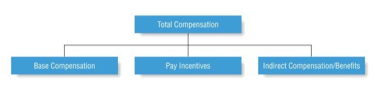
- Base compensation: the regular payment that an employee receives. (paycheck).
- Pay Incentive: A program designed to reward employees for good performance. (bonuses)
- Indirect Compensation/Benefits: the programs that employees acquire when being part of a company and that they pay in a certain way. ( health insurance, vacations, unemployment compensations).
Compensation is the most important cost in most firms.
DESIGNING A COMPENSATION SYSTEM
Compensation affects a person economically, sociologically, and physiologically this is why taking low care of compensation can create issues and impact negatively on employees, therefore on the company´s performance.
The nine criteria for developing a compensation plan:
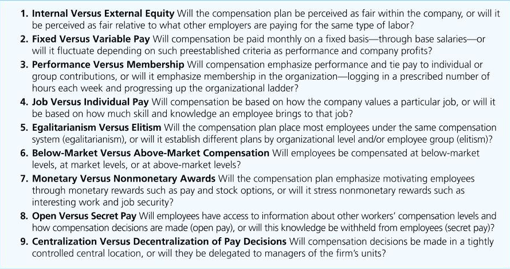
INTERNAL AND EXTERNAL EQUITY
Internal: the perception of fairness related to the pay structure of a firm.
External: the perceived fairness of the payment related to other´s employers’ way of payment to employees for the same job.
Here managers can use two basic models:
- The distributive justice model: employees exchange their contributions or input to the firm for a set of outcomes.
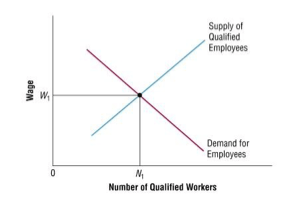
- The labor market model: the wage rate for any given occupation is set at the point where the supply of labor equals the demand for labor in the market place.
SOURCES:
- Gomez-Mejia, L.R., Balkin, D.B. and Cardy, R.L. 2016. Managing Human Resources. Global Edition 8/E. Pearson. London. ISBN-10: 1292097248 • ISBN-13: 9781292097244. Available in Pasila library as a physical and e-book. (select: Read Online)

